Patterns shape the dress before fabric does
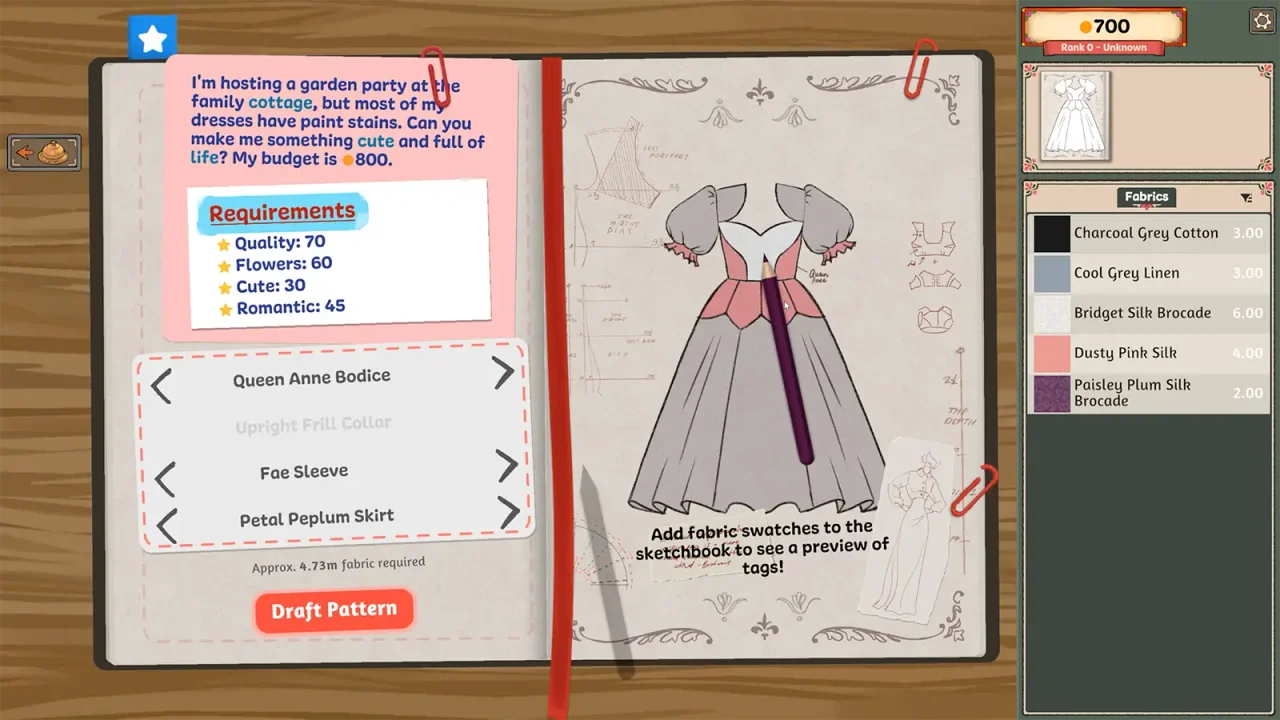
Build the silhouette in the sketchbook, then watch the requirement feedback as you change one component. Bodice, collar, sleeves and skirt make a more useful comparison than picking a whole outfit at random.
| Part | Planning question | Before cutting |
|---|---|---|
| Bodice | Does the upper silhouette move the right style targets? | Confirm the current pattern and client. |
| Collar | Does this detail support the brief or complicate it? | Include all required pieces. |
| Sleeves | How do shape and coverage affect the design? | Compare left and right print direction. |
| Skirt | Does the overall shape suit the occasion? | Review material needs and panel orientation. |
Use combinations as inspiration
The commission finder links a small selection of named patterns with the briefs they were suggested for in published guides. It is more useful to understand what a piece contributes than to assume one recipe is the only answer.
When substituting a pattern you already have, make the change in the sketchbook first. Check whether it shifts a minimum or a maximum, then decide whether a fabric substitution can reasonably balance it. Do not buy a whole new set of cloth before checking the new silhouette.
Save the visual checks for the right station
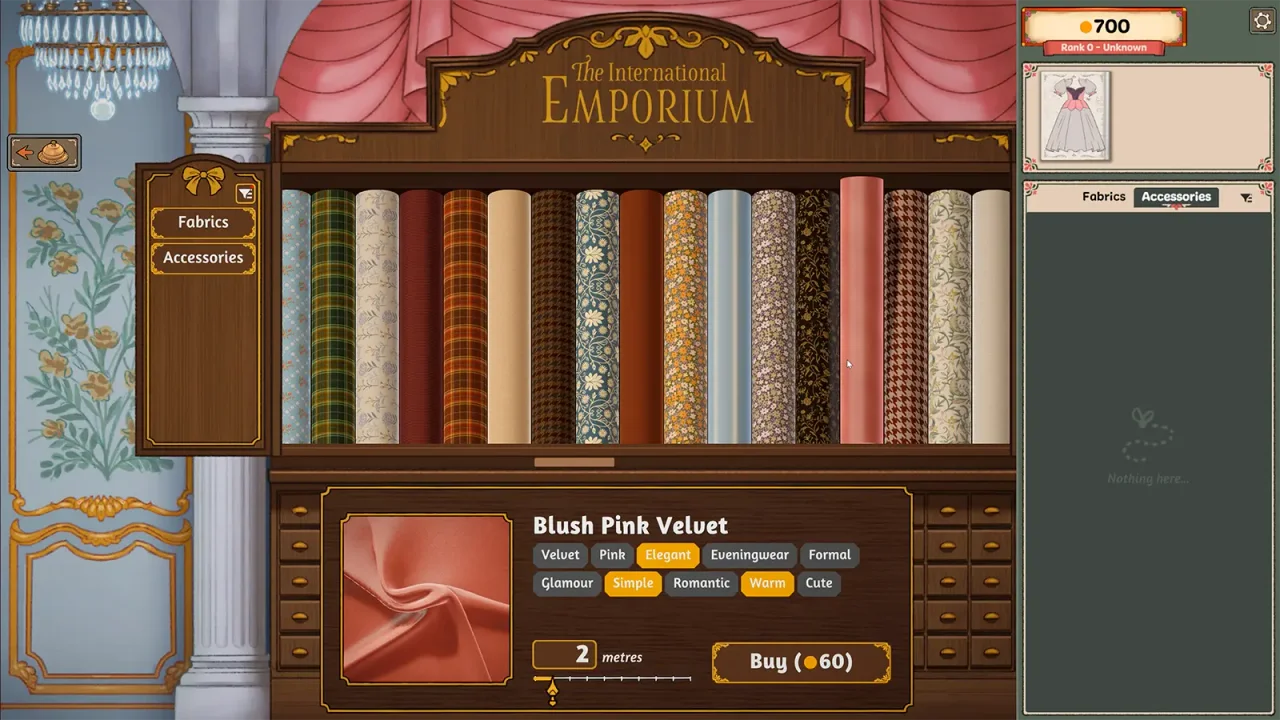
The drawing helps plan colour blocking. The cutting table lets you inspect grain and print placement. The mannequin gives you a view of the assembled shape. Use all three instead of expecting the fabric-shop thumbnail to answer every visual question.
Sources & further reading
- Dressmaker on Steam ↗
- Free Lives — Dressmaker press kit ↗
- Into Indie Games — commission walkthrough by Rabiya Rizwan ↗
- Steam discussion — unable to submit a commission ↗
Reviewed September 24, 2026. Suggest a correction.